BJJ and Mental Health: How Jiu-Jitsu Training Changes Your Mind
BJJ and Mental Health: How Jiu-Jitsu Training Changes Your Mind
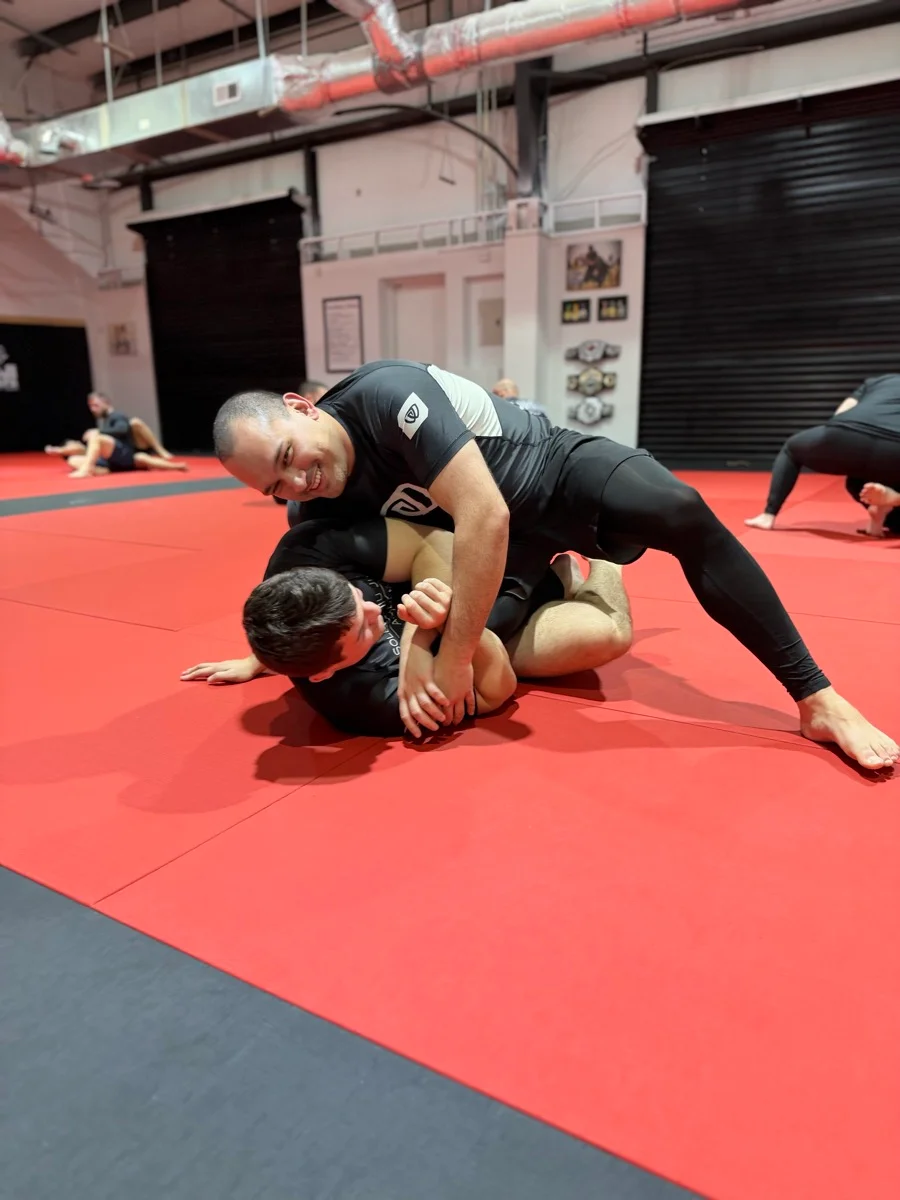
People walk into Solecki BJJ in Gastonia for a lot of different reasons—fitness, self-defense, competition, something new to try. But the reason most of them stay has nothing to do with any of that. They stay because of how BJJ makes them feel. Not just physically, but mentally. Training changes the way you handle stress, the way you think about problems, and the way you carry yourself through daily life.
I've experienced this firsthand. Through years of competing in the UFC, preparing for fights, and dealing with the pressure that comes with performing at that level, BJJ mental health benefits were real and measurable for me. The mat was the one place where my mind went quiet. And I see that same transformation in our students every single week here in Gastonia.
BJJ as Moving Meditation
You've probably heard meditation described as the practice of being fully present. Clearing your mind. Focusing on the moment. Sounds great in theory—but try sitting still with your eyes closed when your brain is racing at a hundred miles per hour. Most people struggle with traditional meditation because their minds won't slow down.
BJJ forces the issue.
When someone is trying to choke you or control your position, you can't think about your mortgage, your work emails, or that argument you had last week. Your entire focus narrows to what's happening right now—your breathing, your movement, your next decision. Everything else disappears.
This isn't a metaphor. It's a literal neurological response. When you're under controlled physical stress, your brain shifts into a state of flow—that zone where you're fully engaged, completely present, and operating on instinct and training.
For people dealing with anxiety, racing thoughts, or just the general noise of modern life, this is incredibly powerful. You walk off the mat with a clear head. The problems are still there, but they feel smaller. More manageable. You have perspective that wasn't there before.
The Science Behind Exercise and Mental Health
The connection between physical exercise and mental health is well-documented. Regular exercise has been shown to:
- Reduce symptoms of anxiety and depression by regulating neurotransmitters like serotonin, dopamine, and norepinephrine
- Lower cortisol levels, reducing chronic stress and its physical effects
- Improve sleep quality, which directly impacts mood, cognitive function, and emotional regulation
- Promote neuroplasticity, helping the brain form new connections and adapt to challenges
- Release endorphins, creating a natural mood boost that can last for hours after training
BJJ amplifies these benefits because it combines multiple forms of exercise into one session. You're doing cardiovascular work, resistance training, and high-intensity intervals all while solving complex physical problems. The mental engagement required for grappling adds a cognitive component that purely physical exercise—like running or lifting weights—doesn't provide.
In other words, you're not just exercising your body. You're exercising your brain at the same time. And both benefit from it.
Building Resilience on the Mat
Resilience—the ability to handle adversity, recover from setbacks, and keep moving forward—is one of the most important life skills you can develop. And BJJ is one of the best tools for building it.
Here's why: BJJ constantly puts you in uncomfortable situations. You get submitted. You get pinned. You get dominated by someone who's been training longer than you. And every time that happens, you learn the same lesson: this is temporary. I can recover from this. I've been here before, and I got through it.
That lesson transfers directly to life off the mat.
How BJJ Builds Mental Toughness
- Embrace discomfort. Every class pushes you past your comfort zone. Over time, you learn that discomfort isn't something to avoid—it's where growth happens.
- Manage failure. You tap out constantly, especially as a beginner. You learn that failure isn't the end—it's feedback. It tells you what to work on next.
- Stay calm under pressure. When someone has you in a bad position, panicking makes it worse. BJJ teaches you to breathe, think, and respond rather than react emotionally.
- Develop patience. Progress in BJJ is slow. Belts take years to earn. This teaches you to trust the process and focus on long-term growth rather than instant gratification.
Resilience is one of our four CORE values at Solecki BJJ—alongside Community, Ownership, and Effort. It's not a buzzword for us. It's something we practice every single day on the mat.
I learned this lesson at the highest level. In the UFC, you don't get to fold when things go wrong in a fight. You adapt. You adjust. You find a way. That mental toughness didn't come from talent—it came from thousands of hours on the mat, failing and trying again. And it's available to anyone willing to put in the work.
Community: The Missing Piece of the Mental Health Puzzle
We can talk about neurochemistry and resilience all day, but there's another component of BJJ's mental health benefits that doesn't get enough attention: community.
Loneliness and social isolation are significant contributors to anxiety, depression, and overall mental health decline. Adults especially struggle to form meaningful connections outside of work and family obligations.
BJJ solves this problem organically.
When you train with the same group of people multiple times a week, you build bonds that go deeper than small talk. You're sharing physical space, trusting each other with your bodies, and going through shared struggle together. There's a vulnerability to grappling—you can't fake it, you can't hide behind a title or social status. On the mat, everyone's just a person trying to get better.
Our students describe this in our Google reviews constantly. Words like "family-oriented," "welcoming," and "bonds that will last forever" come up over and over. That's not something you can manufacture. It comes from genuine connection built through shared effort.
For people who feel isolated, stuck in routines that lack social depth, or disconnected from the people around them—BJJ provides a place to belong. And that sense of belonging is one of the most fundamental human needs.
You can learn more about our community and philosophy on our about page.
BJJ for Anxiety and Stress Management
Let me get specific about anxiety, because it's something a lot of our students in Gastonia and Charlotte deal with.
Anxiety thrives on uncertainty and the feeling of being out of control. BJJ directly counters both of those triggers.
How BJJ Reduces Anxiety
- Physical exhaustion. Anxiety is harder to maintain when your body is genuinely tired. A hard training session metabolizes the adrenaline and nervous energy that fuel anxious thoughts.
- Controlled exposure to stress. BJJ teaches your nervous system that stress is manageable. You experience controlled doses of physical pressure and learn to respond calmly. Over time, your baseline stress response changes.
- Routine and structure. Showing up to class at the same time, going through familiar warm-ups, training with people you trust—routine provides stability, which calms an anxious mind.
- Accomplishment. Anxiety often comes with a sense of inadequacy or helplessness. Every class where you show up, work hard, and learn something new is evidence that you're capable. That accumulates.
- Social support. Knowing you have a group of people who care about you, who notice when you're not there, and who want you to succeed—that's a powerful antidote to the isolation that makes anxiety worse.
I'm not suggesting BJJ is a replacement for professional mental health treatment. If you're dealing with serious anxiety or depression, please talk to a professional. But as a complement to other forms of care—or as a proactive measure to maintain good mental health—BJJ is hard to beat.
Check out our post on the benefits of BJJ for adult beginners for more on what training does for your overall wellbeing.
Physical Fitness and Mental Health: The Feedback Loop
The physical benefits of BJJ—weight loss, improved cardiovascular health, better sleep, increased energy—feed directly back into your mental health. When you feel strong and capable in your body, it changes how you feel in your mind.
This creates a positive feedback loop:
- You train BJJ and your body improves.
- Physical improvement boosts your mood and confidence.
- Better mood and confidence make you more likely to train.
- More training leads to more physical improvement.
- The cycle reinforces itself.
This is why BJJ tends to stick where other fitness programs fail. The mental benefits make the physical ones sustainable, and the physical benefits make the mental ones tangible. They feed each other.
For more on the physical side of this equation, read our post about how BJJ burns calories and builds strength.
Getting Started: Your Mental Health Deserves This
If you've been looking for something that goes beyond a gym membership—something that challenges your mind, gives you a community, teaches you resilience, and leaves you calmer and more focused than when you walked in—BJJ might be exactly what you need.
At Solecki BJJ in Gastonia, your first class is free. You don't need experience, equipment, or any particular fitness level. Just show up and see how it feels. Check out our programs page for class times and options.
The hardest part is walking through the door. Everything after that takes care of itself. Contact us today and take the first step toward a stronger mind and a stronger life.
Ready to Start Your BJJ Journey?
Join us at Solecki BJJ in Gastonia, NC for world-class Brazilian Jiu-Jitsu instruction. Your first class is completely free!