5 Lessons from the UFC That Make Joe Solecki a Better Coach
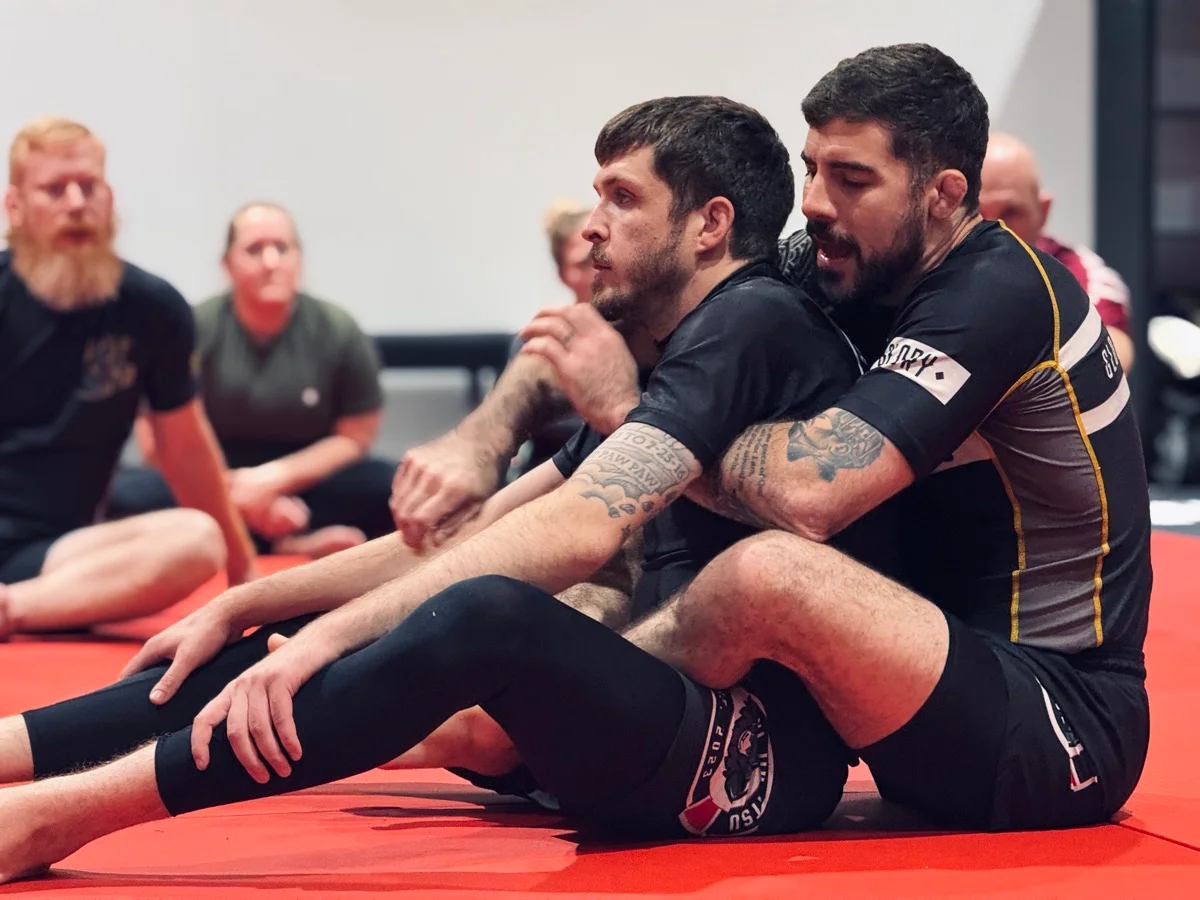
5 Lessons from the UFC That Make Joe Solecki a Better Coach
What Fighting at the Highest Level Taught Me About Teaching Everyday Students
People in Gastonia sometimes ask me what the point of having a UFC fighter as a BJJ coach is if they're never going to fight professionally. It's a fair question. You're not training for a cage fight. You're training to get in shape, learn self-defense, or just do something challenging with good people around you.
But here's the thing: the lessons I learned fighting in the UFC aren't just fight lessons. They're life lessons and coaching lessons that apply to every single student who walks through the door at Solecki Jiu Jitsu in Gastonia. A UFC fighter coaching BJJ brings something to the table that can't be replicated from a textbook or a seminar DVD.
Let me break down the five biggest lessons my UFC career taught me and how they directly impact the way I coach.
Lesson 1: Pressure Testing Is Everything
In the UFC, there's no hiding. A technique either works under maximum pressure or it doesn't. You can drill something a thousand times in practice, but if it falls apart when someone is actively trying to stop you, it's not a real technique. It's a concept.
My 9 submission victories in professional MMA weren't from techniques I learned the week before a fight. They were fundamentals I'd drilled thousands of times and then successfully executed against elite opponents who were doing everything in their power to stop me.
How this shapes my coaching: Every technique I teach at Solecki Jiu Jitsu has been battle-tested. I don't teach theoretical jiu jitsu. I teach techniques that I know work because I've used them when everything was on the line. When you learn a sweep, a pass, or a submission in my class, you're learning something I'd bet my career on--because I already did.
This also means I'm honest about what works and what doesn't. If a technique is low-percentage or situation-specific, I'll tell you. I'd rather you master three reliable attacks than know fifty moves that don't work under pressure.
Lesson 2: Preparation Beats Talent Every Single Time
I was never the most athletic or naturally talented fighter in the UFC. What I was, consistently, was the most prepared.
Every fight camp was built on a detailed game plan. I studied my opponent's tendencies, identified their weaknesses, drilled specific techniques to exploit those weaknesses, and then pressure-tested everything in sparring. By the time fight night came, I'd already fought the fight a hundred times in my head and on the training room floor.
How this shapes my coaching: I don't just teach you techniques. I teach you how to prepare. How to develop a game plan. How to identify patterns in your training partners' games and exploit them. How to approach a roll or a competition with a strategy, not just wing it.
This is especially important for students who plan to compete. Tournament preparation is a skill in itself, and it's one I've developed over decades. But even if you never compete, learning how to prepare methodically for challenges on the mat translates directly to challenges off the mat.
If you're interested in the competition side, I've written a detailed BJJ tournament preparation guide that breaks down my exact framework.
Lesson 3: Adaptability Wins When Plans Fail
Here's the truth about fight plans: they usually go sideways within the first 30 seconds. No matter how well you prepare, your opponent has their own plan, and the moment things don't go the way you expected, you need to adapt.
Some of my best performances in the UFC were fights where my original plan fell apart and I had to improvise. The ability to stay calm, assess a new situation in real time, and make adjustments on the fly is what separates good fighters from great ones.
How this shapes my coaching: I teach my students to think, not just memorize. Understanding the principles behind a technique--why the leverage works, why the angle matters--means you can adapt when something doesn't go exactly as practiced.
This is a big part of what makes our classes different from a "move of the day" approach. I don't just show you what to do. I explain why it works so you can troubleshoot problems on your own and adjust when your training partner throws something unexpected at you.
Jiu jitsu is problem-solving, and the best problem-solvers aren't the ones with the biggest catalog of moves. They're the ones who understand the underlying principles deeply enough to create solutions on the spot.
Lesson 4: Failure Is the Best Teacher
I went 13-6 in my professional career. That means I lost six fights in the UFC against the best fighters on the planet. Every single loss was painful. And every single loss made me a significantly better martial artist.
After each loss, I sat down with my coaching team, reviewed the film, and identified exactly what went wrong. Then I went back to the gym and fixed it. No excuses, no self-pity--just work. That cycle of failure, analysis, and improvement is the most powerful learning tool in martial arts and in life.
How this shapes my coaching: I create an environment where failure is expected and valued. At Solecki Jiu Jitsu, getting tapped out in training isn't a bad thing. It's information. It tells you exactly where your game needs work.
I never let a student feel embarrassed about losing a roll or struggling with a technique. I do the opposite--I help them understand what happened and how to fix it. That growth mindset is baked into our culture, and it's one of the reasons our students progress as quickly as they do.
You'll hear this a lot in our gym: the only failure is not showing up. Everything else is just learning.
Lesson 5: Fundamentals Are the Foundation of Everything
This might sound obvious, but you'd be surprised how many fighters and coaches chase flashy techniques at the expense of fundamentals. In the UFC, the fighters who rely on tricks and gimmicks get exposed. The fighters who have bulletproof basics--solid posture, efficient movement, clean technique--are the ones who last.
My 9 submission wins weren't from exotic techniques. They were rear naked chokes, guillotines, and triangles. Textbook fundamentals executed with precision under pressure. The basics work at every level, from your first day on the mat to the UFC.
How this shapes my coaching: Fundamentals are the backbone of everything we do at Solecki Jiu Jitsu. I don't rush students through the basics to get to the "cool stuff." The basics are the cool stuff. They're what actually works, and mastering them is what separates advanced practitioners from everyone else.
When you train with me, you'll notice that I come back to fundamental concepts constantly, even in advanced classes. That's intentional. The deeper your understanding of the basics, the better everything else becomes.
You can learn more about my approach and background on the about page, or see fight-tested techniques in action on our videos page.
Why This Matters for You
You don't need to be a fighter to benefit from a coach who's fought at the highest level. The lessons I brought home from the UFC--pressure testing, preparation, adaptability, learning from failure, and commitment to fundamentals--make every class at Solecki Jiu Jitsu better for every student.
Whether you're a parent looking for a safe, structured activity for your child, an adult who wants to get in shape and learn self-defense, or a serious competitor preparing for your next tournament, these principles apply to you.
They're the same principles I followed from white belt at age six through my entire UFC career, and they're the same principles I bring to the mat every day at Solecki Jiu Jitsu in Gastonia.
If you want to experience what training with a UFC fighter actually looks like, I've written about that in detail too. Spoiler: it's a lot more welcoming than you'd expect.
Train with Fight-Tested Coaching
The lessons from the UFC don't stay in the cage. They show up in every class, every correction, and every conversation I have with my students. That's the advantage of training at Solecki Jiu Jitsu--you're getting instruction shaped by real experience at the highest level, delivered in a way that's accessible to everyone.
Come see the difference for yourself. Your first class is free. Visit our contact page to schedule your trial class and start training with coaching you won't find anywhere else in Gastonia.
Ready to Start Your BJJ Journey?
Join us at Solecki BJJ in Gastonia, NC for world-class Brazilian Jiu-Jitsu instruction. Your first class is completely free!